
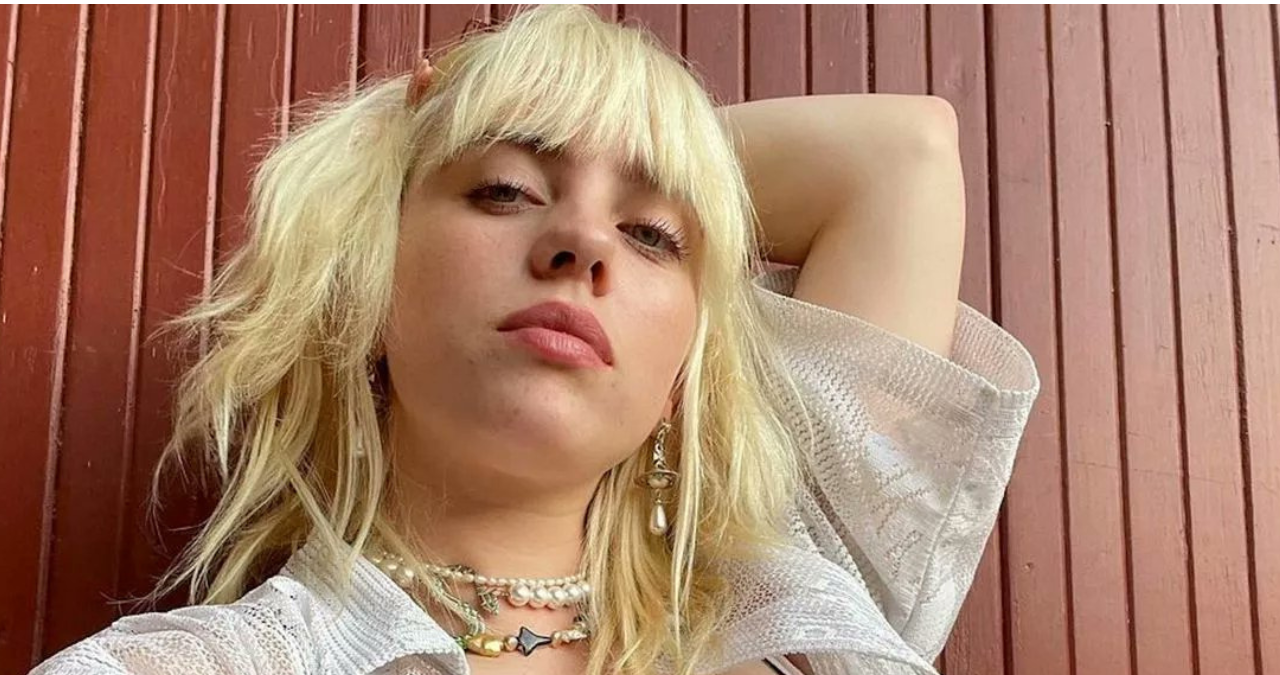
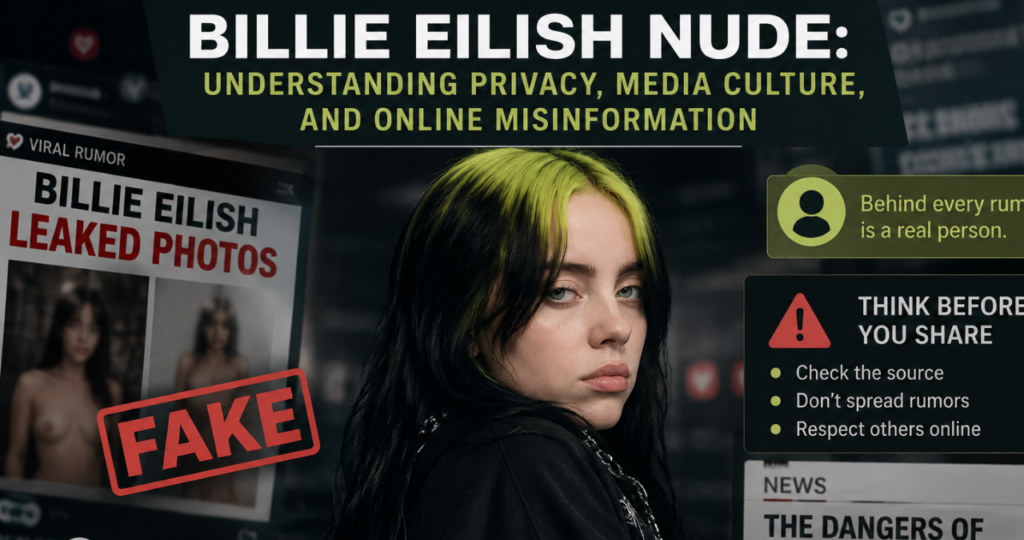
The search phrase “billie eilish nude” appears online because Billie Eilish is one of the most recognizable music artists of her generation, and highly searched celebrities often become the subject of rumors, misleading posts, fake images, and privacy violations. However, a responsible discussion of this topic should focus on facts, digital safety, media literacy, and respect for a person’s privacy rather than sharing or describing intimate material.
Billie Eilish has built a major public career through music, creative visuals, fashion, live performances, and an unusual approach to celebrity culture. Because she has such a large worldwide audience, content using her name can spread very quickly. Unfortunately, not everything connected with a famous person’s name online is authentic.
This makes it important for readers to understand the difference between legitimate public information and misleading or invasive content. A search result, social-media post, video thumbnail, or website headline isn’t automatically proof that a claim is true. In fact, celebrity names are sometimes used to attract clicks to unreliable websites.
The discussion surrounding billie eilish nude searches therefore offers a wider lesson about how the internet works, how misinformation spreads, and why privacy deserves protection.
Who Is Billie Eilish?
Billie Eilish is an American singer and songwriter known for her distinctive voice, creative songwriting, and visually original artistic style. She became internationally famous at a young age and later developed into one of the most successful artists in modern popular music.
Her music has crossed several styles and often explores emotions, relationships, identity, fear, confidence, and personal experiences. Her artistic image has also changed over time, showing that a performer can experiment with fashion and appearance without allowing the public to know everything about their private life.
Eilish has also spoken publicly about body image, clothing, public expectations, and the pressure that can come with being famous. These conversations are important because celebrities are often judged intensely for their appearance.
At the same time, being a public figure doesn’t mean someone loses the right to privacy. A person can choose what they want to share with an audience while keeping other parts of life private.
That distinction is especially important when discussing searches such as billie eilish nude.
Why Does the Phrase Billie Eilish Nude Get Searched?
There are several reasons why a celebrity’s name can become connected to sensitive search terms.
First, famous people naturally receive enormous amounts of online attention. Millions of people may search their names every day. Some searches are about music, while others concern fashion, interviews, relationships, performances, or rumors.
Second, sensational headlines can attract clicks. Unscrupulous websites may combine a celebrity’s name with shocking words because they know people may become curious.
Third, social media can make false claims travel extremely quickly. A post may be copied thousands of times before anyone checks whether it is genuine.
Finally, artificial intelligence and image-editing technology have made it easier to create convincing-looking fake images. A picture may appear realistic while having no connection to an authentic photograph.
Therefore, a search term itself doesn’t establish that the material people are looking for is real.
The Difference Between Public Photos and Private Material
One of the most important ideas in celebrity media is the difference between publicly released images and private or unauthorized material.
A public photograph may have been intentionally published by an artist, photographer, magazine, record company, or event organizer. It can generally be discussed as part of the person’s public career.
Private material is different. It may have been obtained without permission, manipulated, stolen, or falsely presented as authentic.
This difference matters even when a person is extremely famous.
For example, a celebrity may choose to wear a particular outfit during a public performance. That doesn’t mean someone else has permission to create or distribute altered images of that person.
Respecting this boundary is a basic part of responsible internet behavior.
Billie Eilish and Control Over Her Public Image
Billie Eilish has developed a strong visual identity throughout her career. Her clothing, hairstyles, music videos, album artwork, and performances have all contributed to her artistic reputation.
Fashion has sometimes been an important part of her public conversations. Like many performers, she has experienced intense public attention toward her appearance.
However, there is a major difference between discussing an artist’s publicly chosen style and turning that attention into invasive speculation.
A celebrity’s appearance can be part of their art without becoming public property.
This is one reason responsible journalism avoids presenting rumors as facts. It also avoids treating manipulated or unauthorized material as entertainment.
When readers see a headline involving billie eilish nude, they should stop and ask an important question: What is the actual source of this claim?
Fake Celebrity Images and Artificial Intelligence
Technology has changed the way images are created and shared.
Modern editing software can change photographs in ways that may be difficult for ordinary viewers to recognize. Artificial intelligence can also generate or manipulate images using a person’s face or likeness.
This has created new challenges for celebrities and internet users alike.
A manipulated image can be:
- Completely fabricated.
- Created from an unrelated photograph.
- Edited using an existing picture.
- Generated with artificial intelligence.
- Presented with a false caption.
- Taken from another person and falsely labeled.
- Cropped or altered to remove important context.
A realistic appearance doesn’t prove authenticity.
This is particularly important when sensitive images are involved. Sharing an image simply because it looks convincing can amplify misinformation and potentially cause serious harm to the person whose likeness has been used.
Why Celebrity Rumors Spread So Quickly
The internet rewards attention. Content that produces surprise, anger, curiosity, or excitement can receive more clicks and shares.
Celebrity rumors are especially powerful because audiences already recognize the names involved.
A misleading article might use a famous person’s name in its headline even when the article contains little reliable information. Someone might then share the headline without reading the story.
The process can look like this:
- A questionable claim appears online.
- A user notices the celebrity’s name.
- Curiosity leads to a click.
- The page receives traffic.
- Other accounts repeat the claim.
- Search engines may begin seeing more pages discussing the phrase.
- More people encounter the claim.
- The rumor appears increasingly believable simply because it is everywhere.
But repetition doesn’t turn a false claim into a fact.
This is known as a form of the illusory truth effect, where repeated information can feel more familiar and therefore more believable.
How to Check Whether a Celebrity Claim Is Real
Readers can protect themselves by developing simple fact-checking habits.
Check the Original Source
Don’t rely only on screenshots, reposts, or anonymous social-media accounts. Look for the original publication.
Look for Independent Confirmation
If a major claim about a celebrity is genuinely important, reputable media organizations may report it independently.
Examine the Date
Old photographs and stories are frequently recycled as if they are new.
Watch for Sensational Headlines
Words designed to provoke shock or curiosity can be a warning sign.
Examine the Image Carefully
Unusual lighting, strange edges, distorted hands, inconsistent shadows, or unnatural details may indicate manipulation. However, visual inspection alone isn’t always enough because modern technology can create sophisticated fakes.
Don’t Assume Search Results Are Proof
Search engines organize available information. They don’t automatically certify every webpage as trustworthy.
These habits are useful whenever someone encounters searches such as billie eilish nude.
Why Sharing Unauthorized Images Can Cause Harm
The effects of invasive content can extend far beyond a single online post.
A person whose likeness has been manipulated or whose private material has been distributed without permission may experience embarrassment, emotional distress, harassment, professional problems, and loss of control over their own image.
The material can also be copied repeatedly. Once something has spread online, removing every copy can be extremely difficult.
This is why the safest approach is simple: don’t download, repost, promote, or distribute intimate material that appears to involve a person without their clear permission.
The same principle applies to celebrities and ordinary people.
Being famous doesn’t remove someone’s basic right to dignity.
The Importance of Consent Online
Consent is a central idea in responsible digital behavior.
When someone intentionally publishes a photograph, they control the context in which it is presented. That doesn’t automatically give other people permission to transform it into something else.
Consent also matters when images are edited, shared, or republished.
For young internet users especially, understanding consent is an important part of digital citizenship. Before posting something involving another person, it is useful to ask:
- Did this person agree to have it shared?
- Is the material being presented honestly?
- Am I changing the original context?
- Could sharing it embarrass or harm someone?
- Would I want the same thing done to me?
These questions encourage healthier online communities.
Billie Eilish, Fashion, and Body Image
Another reason discussions around Billie Eilish’s appearance attract attention is her history of challenging expectations about clothing and body image.
Her fashion choices have sometimes been discussed as part of her artistic identity. She has also faced the kind of intense appearance-based commentary that many young celebrities experience.
The broader lesson is valuable: clothing doesn’t define a person’s worth.
People should be able to experiment with fashion without having every appearance turned into speculation about their bodies.
For teenagers and young adults, this message can be especially important. Social media often creates unrealistic expectations about appearance. Edited photographs, filters, carefully selected poses, and artificial images can make ordinary bodies seem inadequate.
Healthy media habits involve remembering that online images rarely show the complete reality of a person’s life.
How Social Media Changes Celebrity Culture
Social media has made the relationship between artists and fans more direct.
A musician can communicate with millions of people without relying entirely on traditional newspapers, magazines, or television networks. Fans can watch performances, learn about new releases, and follow creative projects almost immediately.
However, this direct connection has a downside.
The same platforms that help artists communicate with fans can also spread:
- False rumors.
- Impersonation accounts.
- Edited photographs.
- Fake interviews.
- Misleading headlines.
- AI-generated content.
- Clickbait videos.
- Fabricated celebrity stories.
The speed of social media means that false information can travel much faster than corrections.
That’s why users should think before sharing.
The Role of Responsible Journalism
Good journalism is based on verification.
Professional reporters are expected to distinguish between confirmed information, allegations, speculation, and unsupported internet claims.
A responsible article should provide context and avoid presenting uncertain information as established fact.
For sensitive celebrity topics, responsible reporting is particularly important. Writers should consider whether publishing a detail serves a legitimate public interest or simply satisfies curiosity.
This distinction separates useful journalism from clickbait.
A trustworthy publication should also correct mistakes when credible evidence shows that an earlier claim was wrong.
Readers can support better journalism by choosing sources that demonstrate these standards.
Search Engines and Clickbait
Search engines are an important part of modern information discovery, but users should understand that search rankings aren’t the same as factual approval.
A page can rank because of many factors, including relevance, popularity, links, technical structure, and search behavior.
Some websites deliberately target popular searches with sensational content.
For example, a page may use a celebrity’s name and a provocative phrase repeatedly even though it provides no trustworthy evidence.
This strategy can create an unpleasant cycle:
popular search → clickbait page → more traffic → more copies → greater visibility
Readers can help break that cycle by avoiding unreliable pages and not sharing misleading content.
A Simple Digital Safety Guide
When encountering sensitive celebrity content, use a careful approach.
Stop Before Sharing
If a claim seems shocking, don’t immediately repost it.
Check Multiple Sources
Compare information from credible publications.
Avoid Suspicious Downloads
Unknown websites can contain malware, misleading advertisements, or deceptive download buttons.
Don’t Provide Personal Information
A website promising exclusive celebrity content may attempt to collect email addresses, passwords, or other personal information.
Report Harmful Content
Most major social platforms provide reporting systems for privacy violations, impersonation, manipulated media, and harassment.
Respect the Person Involved
Think about the human being behind the celebrity name.
These simple steps can make online spaces safer for everyone.
Common Misconceptions About Billie Eilish Nude Searches
Several misunderstandings can appear around sensitive celebrity searches.
| Misconception | More Accurate Understanding |
|---|---|
| A search result proves an image is genuine | Search results can include unreliable or misleading pages |
| A viral image must be authentic | Viral content can be edited or fabricated |
| Celebrity status removes privacy | Public figures still have personal boundaries |
| AI images are automatically harmless | AI manipulation can create serious privacy problems |
| Reposting is harmless if someone else posted first | Reposting can further spread invasive or false material |
| Many websites repeating a claim proves it | Multiple sites may simply be copying the same rumor |
| A realistic image must be real | Modern editing technology can produce convincing fakes |
Understanding these points helps readers become more careful consumers of online information.
How Fans Can Support Billie Eilish Responsibly
Fans have many positive ways to support an artist.
Instead of focusing on invasive rumors, fans can:
- Listen to officially released music.
- Watch authorized music videos.
- Attend legitimate concerts and events.
- Follow verified social-media accounts.
- Discuss songs and artistic projects.
- Support official merchandise.
- Share verified interviews.
- Celebrate creative achievements.
- Recommend music to friends.
- Respect personal boundaries.
A strong fan community doesn’t need invasive material to show enthusiasm.
In fact, supporting an artist’s work rather than rumors creates a healthier relationship between celebrities and audiences.
The Wider Lesson About Internet Privacy
The discussion around billie eilish nude is part of a much larger issue.
Privacy concerns affect millions of people who aren’t famous.
Private photographs can be stolen. Fake accounts can be created. Images can be manipulated. Personal information can be spread without permission.
Technology makes it easier to create content, but it also makes responsible behavior more important.
Everyone can benefit from learning basic digital-literacy skills.
Before sharing content, consider its source, accuracy, context, and possible impact.
That’s a small habit, but it can make a significant difference.
What Readers Should Remember
The internet can be an excellent place to learn about music, entertainment, fashion, and culture. However, it also contains misinformation and content created primarily to attract attention.
When a sensitive search involving a celebrity appears, readers should not assume that every result is authentic.
The most reliable approach is to:
- Verify information.
- Use reputable sources.
- Avoid suspicious websites.
- Question sensational claims.
- Recognize that images can be manipulated.
- Respect privacy and consent.
- Avoid spreading unverified material.
- Focus on the person’s legitimate public work.
These principles are useful not only for searches involving Billie Eilish but for almost every celebrity-related topic.
Frequently Asked Questions About Billie Eilish Nude Searches
Is everything online about Billie Eilish authentic?
No. The internet contains legitimate interviews, photographs, music videos, fan discussions, rumors, edited images, and fabricated material. Users should verify important claims through reliable sources.
Can celebrity photographs be manipulated?
Yes. Modern editing software and artificial intelligence can significantly alter photographs or create entirely synthetic images.
Does being a celebrity mean someone has no privacy?
No. Public figures may have less privacy in some aspects of their professional lives, but fame doesn’t give the public unlimited permission to access or distribute private material.
How should I respond to a suspicious celebrity image?
Don’t repost it. Check reliable sources and consider reporting content that appears to violate someone’s privacy or falsely represent them.
Why do sensitive celebrity searches become popular?
Curiosity, clickbait, social-media algorithms, rumors, and sensational headlines can all contribute to search interest.
What is the safest way to follow Billie Eilish?
Use official or verified channels and focus on her legitimate music, performances, interviews, and creative projects.
Final Thoughts on Billie Eilish Nude Searches
The phrase “billie eilish nude” demonstrates how celebrity culture, technology, privacy, and online misinformation can overlap. Billie Eilish’s fame naturally generates enormous interest, but not every piece of content connected to her name deserves attention or trust.
A responsible internet user doesn’t simply believe something because it is popular. Instead, they ask where the information came from, whether it has been verified, and whether sharing it could harm another person.
As digital tools become more powerful, media literacy will become even more important. AI-generated images and sophisticated editing can make false material look convincing, while social-media platforms can distribute that material within moments.
The positive side is that users have the ability to make better choices. By checking sources, rejecting clickbait, protecting privacy, and supporting artists through legitimate work, audiences can help create a more trustworthy online environment.
Ultimately, the best way to engage with Billie Eilish is through the things she has intentionally created and shared with the public: her music, performances, artistic ideas, and creative work. When discussing searches such as billie eilish nude, accuracy, consent, privacy, and respect should remain at the center of the conversation.
Join vantage here to receive the latest news and daily updates.Categories