
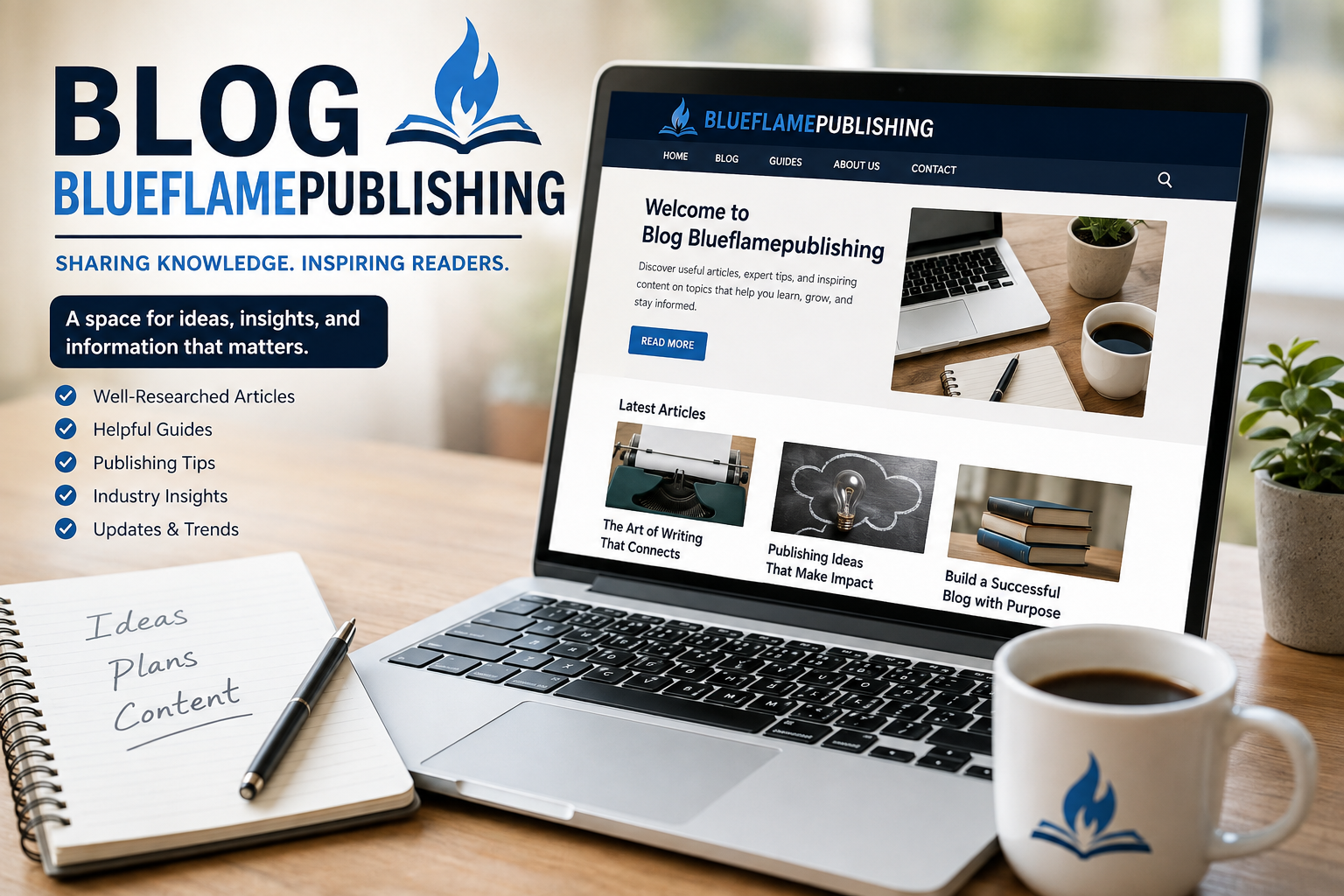
Blog Blueflamepublishing is a phrase that may lead readers to questions about blogging, publishing, online content, and the role of digital platforms in sharing information. In today’s internet-driven world, blogs have become much more than simple online diaries. They can be useful sources of information, places for creative expression, educational resources, and important tools for businesses and publishers.
When people search for blog blueflamepublishing, they may be looking for information about blogging practices, publishing content online, or understanding how a publishing-focused blog can work. Whatever the reason, it’s important to look at the subject clearly and avoid confusing assumptions.
A good blog should offer readers something useful. It should answer questions, explain ideas, provide trustworthy information, and make complicated subjects easier to understand. After all, readers usually visit a blog because they want to learn something or solve a problem.
This guide explores the meaning and purpose of blogging, how publishing platforms work, what makes online content valuable, and how readers can judge whether a blog is trustworthy.
What Is Blog Blueflamepublishing?
The phrase blog blueflamepublishing can be understood as a search topic connected with a blog or publishing-related online platform. The word “blog” generally refers to regularly published online content, while “publishing” relates to the process of preparing and sharing written or digital material with an audience.
The exact purpose of a website or blog can vary. Some publishing blogs focus on news and current events, while others concentrate on business, technology, lifestyle, entertainment, education, or creative writing. Because of this, readers should always consider the actual content and purpose of a site rather than judging it only by its name.
A publishing blog can serve several useful purposes. It may provide articles, guides, opinions, educational material, interviews, reviews, or industry information. The strongest blogs usually have a clear audience and a consistent editorial direction.
Why Do People Read Publishing Blogs?
There are many reasons people turn to blogs for information.
Readers may want to:
- Learn about a new topic
- Find answers to everyday questions
- Follow industry developments
- Read opinions and analysis
- Discover useful tips
- Explore creative ideas
- Understand complicated subjects in simple language
- Find recommendations and resources
- Keep up with online trends
In short, blogs can save readers time by bringing useful information together in one convenient place.
The Growing Importance of Online Publishing
The internet has changed the way people discover and consume information. In the past, newspapers, magazines, books, and television were among the main sources of published information. Today, readers can access articles from around the world within seconds.
This change has created enormous opportunities for bloggers and independent publishers.
A person with knowledge about a subject can create a website, publish useful articles, and build an audience without needing a traditional publishing company. That doesn’t mean success comes easily, though. Creating a website is only the beginning.
Successful publishing requires:
- Good research
- Clear writing
- Regular publishing
- Strong editing
- Audience understanding
- Search engine optimization
- Trustworthy sources
- Attractive presentation
- Patience and consistency
That’s why modern blogging is both a creative activity and a serious publishing skill.
How a Modern Blog Works
At first glance, a blog may look simple. A visitor opens a webpage, reads an article, and moves on. Behind that simple experience, however, there can be a complete publishing system.
A typical blog involves several important parts.
| Blog Element | Main Purpose |
|---|---|
| Homepage | Introduces the website and its main content |
| Articles | Provide detailed information to readers |
| Categories | Organize content by subject |
| Search feature | Helps visitors find specific information |
| About page | Explains the purpose or identity of the website |
| Contact page | Provides a way for readers to communicate |
| Author information | Helps establish credibility |
| Images | Improve visual understanding and engagement |
| Internal links | Connect related articles |
| Search optimization | Helps content become discoverable online |
When these elements work together, the website becomes easier to use.
A strong blog doesn’t simply publish article after article. It creates an organized experience where readers can quickly find what they need.
What Makes a Blog Useful to Readers?
A blog can publish hundreds of articles and still provide little value. Quantity alone doesn’t guarantee quality.
Useful content normally begins with a real reader need. For example, someone searching for an explanation may not want a short definition. They may want examples, background information, practical advice, and answers to common questions.
Good content should therefore be:
- Relevant
- Accurate
- Easy to understand
- Well organized
- Helpful
- Original
- Updated when necessary
- Written for real people
This is particularly important when discussing blog blueflamepublishing or any other publishing-related topic. Readers deserve information that helps them understand the subject rather than content created only to attract search traffic.
The Role of Research in Blogging
Research is one of the most important parts of professional blogging.
Before writing an article, a writer should understand the subject. This means checking reliable sources, comparing information, identifying important facts, and separating confirmed information from assumptions.
Good research can improve an article in several ways.
First, it reduces factual errors. Nobody wants to read an article that confidently presents incorrect information.
Second, research gives the writer a better understanding of the topic. Instead of repeating basic statements, the writer can explain why something matters.
Third, research helps build trust. Readers are more likely to return to websites that consistently provide useful and accurate information.
Reliable Research Habits
A careful writer should:
- Check official sources when possible
- Compare information from multiple trustworthy sources
- Look for recent information when the topic changes frequently
- Avoid presenting rumors as facts
- Separate opinions from verified information
- Correct mistakes when they are discovered
These habits are useful for every type of blog.
Why Author Expertise Matters
Readers naturally want to know whether the person writing an article understands the subject.
Expertise doesn’t always mean having an impressive job title. It can also come from education, professional experience, research, practical knowledge, or long-term involvement with a particular subject.
For example, someone writing about web development should ideally understand websites and online technology. A person writing about publishing should understand writing, editing, content strategy, and digital communication.
This is part of a broader idea often described as experience, expertise, authority, and trust.
A high-quality publishing website should make a reasonable effort to demonstrate these qualities through its content and editorial practices.
Building Trust Through Transparent Content
Trust is especially important online because anyone can publish information.
A trustworthy blog should make it reasonably clear who is behind the content and what the website is trying to accomplish.
Useful trust signals may include:
- An informative About page
- Clear author information
- Contact details
- Editorial standards
- Accurate information
- Appropriate citations or source references
- Clear corrections when mistakes occur
- Updated articles when information changes
- Transparent advertising practices
These details may seem small, but together they can make a major difference.
When a website is transparent, readers have more confidence in what they are reading.
Blog Blueflamepublishing and the Value of Clear Writing
One of the biggest advantages of blogging is the ability to explain subjects in ordinary language.
Not every reader is an expert. In fact, many visitors come to a blog precisely because they don’t understand a topic yet.
That’s why complicated language can become a problem.
A good writer should explain difficult ideas using:
- Short and clear sentences
- Familiar words
- Helpful examples
- Simple comparisons
- Descriptive headings
- Bullet points
- Tables when appropriate
This doesn’t mean professional writing has to sound childish. It simply means the writer respects the reader’s time and knowledge level.
For blog blueflamepublishing, this same principle applies. A reader should be able to understand the article without constantly searching for the meaning of complicated terms.
The Importance of Original Content
Originality is another important part of modern publishing.
Copying content from another website doesn’t create real value. Readers can usually find the original source themselves. A better approach is to research a subject and then explain it in a fresh, useful way.
Original content can include:
- New explanations
- Personal observations
- Expert analysis
- Original examples
- Practical guides
- Comparisons
- Interviews
- Research summaries
- Step-by-step instructions
Being original doesn’t necessarily mean inventing completely new facts. It means presenting information thoughtfully and adding genuine value.
How SEO Supports a Publishing Blog
Search engine optimization, commonly called SEO, helps websites become easier to discover through search engines.
However, SEO shouldn’t replace good writing.
A common mistake is trying to place a keyword in every sentence. This often makes an article sound robotic. Search terms should be included naturally, where they genuinely fit the subject.
Effective SEO can involve:
- Understanding search intent
- Writing useful titles
- Creating logical headings
- Using descriptive URLs
- Adding relevant internal links
- Optimizing images
- Improving page speed
- Making content easy to read
- Providing accurate information
- Keeping important pages accessible
The goal should be simple: create a page that deserves to be found.
Understanding Search Intent
Search intent means understanding what someone actually wants when they type a phrase into a search engine.
For example, someone searching for the name of a blog may simply want to find the website. Another person may want to understand what the blog publishes. Someone else may be researching whether the website is trustworthy.
These are different needs.
A good article considers those possible questions and answers them naturally.
This is particularly useful when developing content around a phrase such as blog blueflamepublishing. Instead of forcing the keyword repeatedly into the article, a writer should focus on the questions a real reader may have.
The Difference Between a Blog and a Traditional Publication
Blogs and traditional publications share some similarities, but they also have important differences.
Traditional publications often operate through established editorial structures. They may have editors, reporters, publishers, print schedules, and formal distribution systems.
Blogs can be much more flexible.
A blog may be operated by:
- One individual
- A small writing team
- A business
- A nonprofit organization
- A media company
- A professional publishing team
Blogs can also respond quickly to new topics. An article can be written, edited, published, and updated without waiting for a physical printing process.
This flexibility is one reason online publishing has become so popular.
Common Types of Blog Content
There isn’t just one type of blog article. Different formats serve different purposes.
Informational Articles
These explain a topic and answer reader questions. They are especially useful for educational searches.
How-To Guides
These show readers how to complete a task. Step-by-step instructions can be extremely valuable when they are accurate and easy to follow.
Reviews
Reviews evaluate products, services, books, websites, entertainment, or experiences. Good reviews should explain both strengths and weaknesses.
Opinion Articles
Opinion pieces allow writers to express viewpoints. They should be clearly presented as opinions rather than disguised as facts.
News and Updates
News-focused blogs provide information about current developments. Accuracy and freshness are particularly important in this category.
Lists and Resource Guides
These organize information into convenient collections. When done well, they can help readers compare options quickly.
Why Formatting Matters
Even excellent information can be difficult to read if it appears as one giant block of text.
Online readers often scan articles before deciding whether to read them fully. Clear formatting makes this easier.
Useful formatting includes:
- H1 titles
- H2 and H3 headings
- Short paragraphs
- Bullet points
- Tables
- Bold emphasis where appropriate
- Descriptive subheadings
- Relevant images
Good formatting isn’t just about appearance. It improves usability.
The Role of Images in Blogging
Images can make an article more engaging and can sometimes explain an idea better than words.
For example, a technical guide might use screenshots. A travel article might use photographs. A design article might use examples. A publishing article might use illustrations showing how the content process works.
However, images should have a purpose.
Using random images simply to fill space doesn’t necessarily improve an article. Relevant visuals are more helpful because they support the information.
Writers should also pay attention to image quality, accessibility, file size, and appropriate usage rights.
Keeping Blog Content Fresh
The internet changes quickly.
An article that was accurate several years ago may now contain outdated information. This is especially true for subjects involving technology, online platforms, laws, business developments, and current events.
Updating content can involve:
- Checking old facts
- Replacing outdated information
- Updating examples
- Removing broken links
- Adding new developments
- Improving unclear sections
- Reviewing statistics
- Correcting errors
A good publisher understands that publishing isn’t always a one-time task.
Sometimes, the best article is an older article that has been carefully improved.
Common Mistakes New Bloggers Make
Blogging may look easy, but beginners often make avoidable mistakes.
Some common problems include:
- Writing without understanding the audience
- Using excessive keywords
- Publishing copied material
- Ignoring grammar and spelling
- Using misleading titles
- Providing unsupported claims
- Publishing very thin articles
- Forgetting mobile users
- Ignoring website speed
- Failing to update old content
The good news is that these problems can be fixed.
Blogging is a skill that improves with practice. A writer can study what works, learn from mistakes, and gradually develop a stronger publishing process.
How Readers Can Evaluate a Blog
Readers also have a role to play.
Not everything published online is automatically true. Before trusting an article, visitors can ask a few simple questions.
Who wrote it?
Look for information about the author when the subject requires expertise.
When was it published or updated?
Older information may not always be wrong, but some topics change rapidly.
Does the article provide evidence?
Important claims should ideally be supported by reliable information.
Is the website transparent?
An About page and contact information can help readers understand the publication.
Does the article sound balanced?
Extremely strong claims without supporting evidence deserve careful attention.
These habits help readers make smarter decisions online.
Blog Blueflamepublishing as a Publishing Concept
When considering blog blueflamepublishing, it’s helpful to think beyond the keyword itself and focus on the larger world of digital publishing.
A successful publishing blog isn’t built simply by putting words on a webpage. It requires planning, research, editing, design, technical maintenance, and an understanding of the audience.
A strong publishing process often looks like this:
- Choose a useful topic
- Understand the audience
- Research the subject
- Create an outline
- Write the first draft
- Check facts
- Edit the language
- Improve the structure
- Add useful visuals
- Optimize the page
- Publish
- Monitor performance
- Update when necessary
This process may sound like a lot of work, but it becomes easier with experience.
How Blogs Can Build Communities
A blog can become more than a collection of articles. It can become a place where people with similar interests gather.
Comments, newsletters, social media discussions, email communication, and community groups can help publishers connect with readers.
For example, a publishing blog about technology may attract developers, students, business owners, and technology enthusiasts. A writing blog may attract authors, editors, publishers, and readers.
This community aspect can make blogging much more meaningful.
Instead of simply publishing content, the writer becomes part of an ongoing conversation.
The Future of Digital Publishing
Digital publishing continues to evolve.
Artificial intelligence, mobile devices, video, social media, voice search, newsletters, and other technologies are changing how people discover information.
Yet one thing remains important: people still want useful and trustworthy information.
Technology can help publishers work faster, but technology alone doesn’t guarantee quality. Human judgment remains important when deciding whether information is accurate, useful, fair, and appropriate.
Future publishers will likely need to combine traditional writing skills with digital knowledge.
That means understanding both how to communicate and how digital platforms work.
Practical Tips for Creating a Better Blog
Anyone interested in creating or improving a publishing blog can start with a few simple principles.
Know Your Audience
Write for real people, not just search engines. Understand what your readers want to learn.
Choose Useful Topics
Look for questions people genuinely ask. Helpful topics usually have more long-term value than meaningless filler.
Write Naturally
Don’t force keywords into every sentence. If the content is useful, natural language will usually produce a better reading experience.
Check Your Facts
Take time to verify important information before publishing.
Edit Carefully
A first draft is rarely perfect. Read your work again and improve awkward sentences.
Make Navigation Easy
Readers should be able to move between related articles without getting lost.
Update Important Pages
Review older content when facts, technology, or circumstances change.
Be Patient
Building a successful blog rarely happens overnight. Consistency matters.
Frequently Asked Questions About Blog Blueflamepublishing
What does blog blueflamepublishing mean?
Blog blueflamepublishing appears to be a phrase associated with a blog or publishing-related search topic. Its exact meaning depends on the specific website or context in which the phrase is being used.
Is every blog a reliable source?
No. Blogs can contain excellent information, but readers should evaluate the author, sources, publication date, and overall credibility before accepting important claims.
Why is original content important?
Original content gives readers something useful instead of simply repeating material they can already find elsewhere. It can also help a website develop a stronger identity and reputation.
Does SEO matter for blogs?
Yes, SEO can help readers discover useful content through search engines. However, SEO should support quality writing rather than replace it.
Should a blog use images?
Relevant images can improve understanding and make pages more engaging. They should be selected carefully and used when they add value.
How often should a blog publish?
There is no single perfect schedule. A realistic and consistent publishing schedule is usually better than publishing large amounts of low-quality content.
Can a small blog compete with large websites?
Yes, especially when it serves a specific audience and provides genuinely useful information. Smaller websites can succeed by focusing on quality, expertise, originality, and reader needs.
Final Thoughts on Blog Blueflamepublishing
The world of online publishing is broad, creative, and constantly changing. A successful blog isn’t simply a website filled with articles. It is a communication platform built around useful information, clear writing, trust, and a genuine understanding of readers.
Whether someone is researching blog blueflamepublishing, exploring digital publishing, or thinking about starting a blog of their own, the same basic principles remain valuable: research carefully, write clearly, publish responsibly, and always put the reader first.
There’s no magic shortcut to building a respected online publication. It takes time, patience, learning, and consistent effort. Still, the opportunity is exciting. With thoughtful content and responsible publishing practices, a blog can become a useful resource for readers and a meaningful platform for sharing knowledge.
Ultimately, blog blueflamepublishing can be viewed within the larger and continually developing world of digital content, where quality information, human-centered writing, and trust remain the foundations of successful publishing.
Join vantage here to receive the latest news and daily updates.