
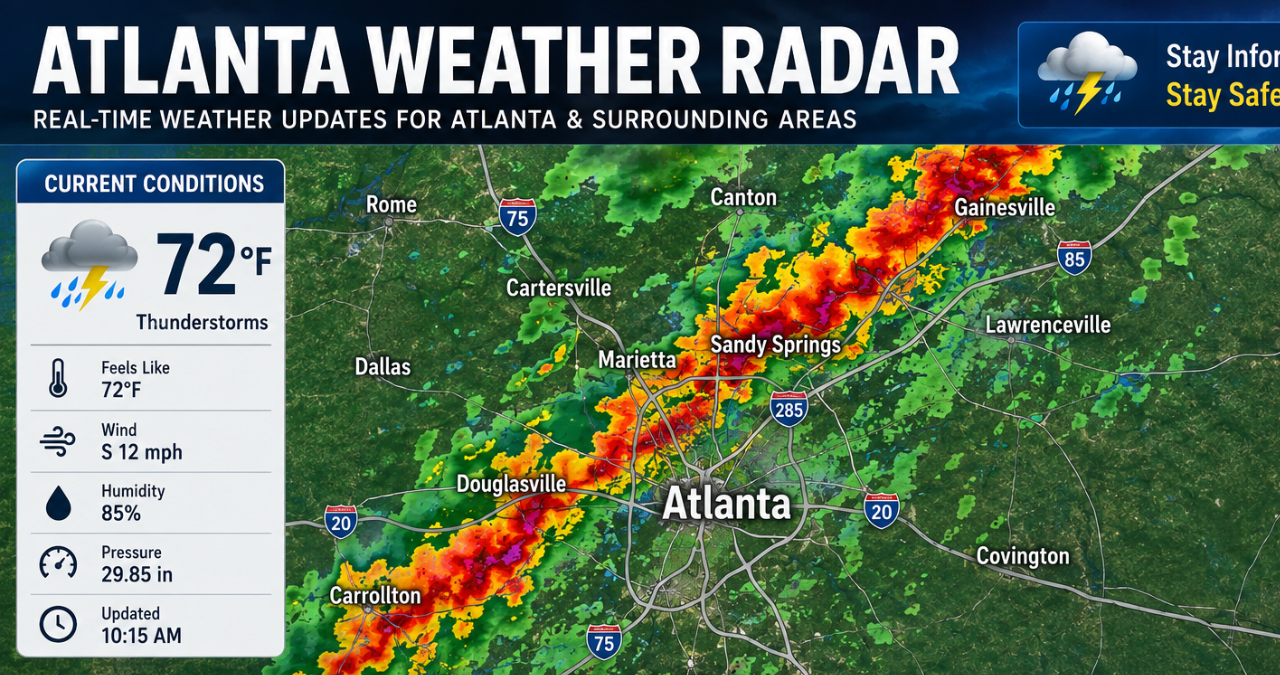
Atlanta weather radar is one of the most useful tools for anyone who lives in or visits Atlanta. The city’s weather can change quickly, bringing sunshine one moment and heavy rain or thunderstorms the next. By using atlanta weather radar, people can track storms, prepare for changing weather, and make safer decisions before heading outdoors.
Whether you are planning a family picnic, driving to work, flying from the airport, or simply checking if you need an umbrella, understanding atlanta weather radar can make your day easier. This guide explains how weather radar works, why it is important, and how you can use it to stay informed throughout the year.
What Is Atlanta Weather Radar?
Atlanta weather radar is a weather tracking system that detects rain, snow, storms, and other forms of precipitation around the Atlanta area. Radar stands for Radio Detection and Ranging. It sends out radio waves that bounce off rain, snow, hail, and other particles in the atmosphere.
When these waves return, computers analyze the information and create colorful radar images. These images show where precipitation is happening, how heavy it is, and which direction it is moving.
Weather experts use radar every day to monitor storms and provide forecasts. Many websites, television stations, and mobile apps also share radar images so the public can stay updated.
Why Atlanta Weather Changes So Quickly
Atlanta has a humid subtropical climate, which means it experiences warm summers, mild winters, and frequent thunderstorms. Several weather systems often meet near Georgia, making conditions change quickly.
Common reasons for changing weather include:
- Warm air moving in from the Gulf of Mexico
- Cold fronts arriving from the north
- Moist air creating thunderstorms
- Seasonal weather patterns
- Tropical systems moving inland
Because these weather systems interact regularly, residents often check atlanta weather radar before leaving home.
How Atlanta Weather Radar Works
Weather radar uses a large rotating antenna that sends radio waves into the sky.
The basic process includes:
| Step | What Happens |
|---|---|
| Radio waves are sent | Radar transmits invisible radio signals. |
| Waves hit precipitation | Rain, hail, or snow reflects the signals. |
| Signals return | The radar receives the reflected waves. |
| Computers process data | Software creates radar images. |
| Forecasts are updated | Meteorologists study movement and intensity. |
This technology allows weather experts to watch storms in real time.
Without radar, forecasting sudden thunderstorms would be much harder.
Understanding Radar Colors
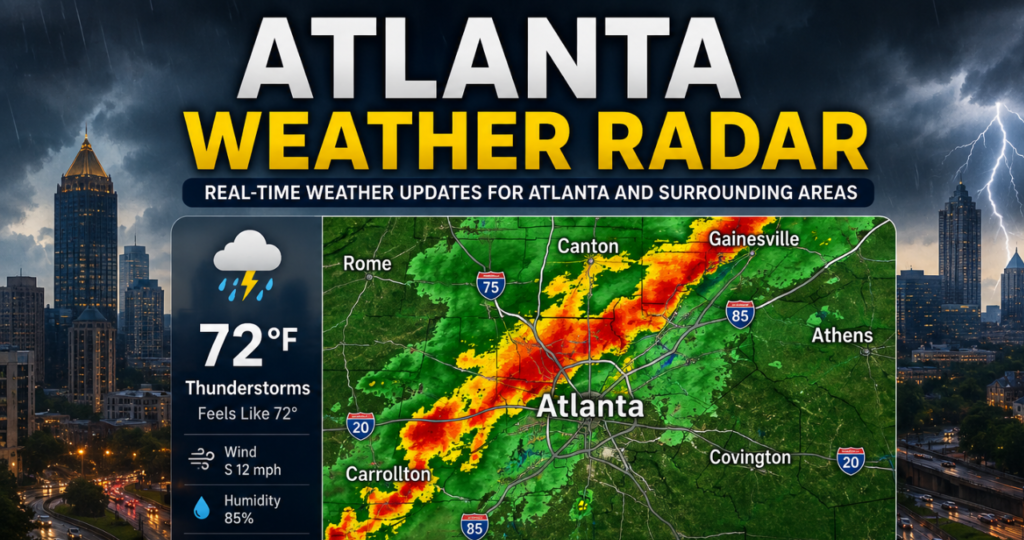
One of the easiest parts of reading atlanta weather radar is understanding the colors.
Although color scales vary slightly, they usually mean the following:
| Color | Meaning |
| Light Green | Very light rain |
| Dark Green | Light rain |
| Yellow | Moderate rain |
| Orange | Heavy rain |
| Red | Very heavy rain or severe thunderstorms |
| Purple | Possible hail or very intense storms |
Remember that radar colors estimate precipitation intensity. They do not always tell you exactly what is happening on the ground.
Types of Weather You Can Track with Atlanta Weather Radar
Modern radar systems monitor many weather conditions.
These include:
Rain
Rain is the easiest type of precipitation for radar to detect.
Thunderstorms
Radar shows where thunderstorms are forming and how fast they are moving.
Hail
Strong storms may produce hail, and radar often detects these dangerous conditions.
Snow
Although snow is less common in Atlanta, radar still tracks winter precipitation.
Tropical Storms
When tropical systems move inland, radar helps monitor rainfall and storm movement.
Tornado-Producing Storms
Radar cannot always see a tornado directly, but it can detect storm rotation that may lead to tornado warnings.
Why Atlanta Weather Radar Is Important
There are many reasons people rely on atlanta weather radar every day.
Some important benefits include:
- Helps families prepare for storms
- Improves travel planning
- Supports outdoor events
- Protects farms and gardens
- Helps emergency services respond faster
- Assists pilots with flight planning
- Reduces weather-related risks
Having access to radar information gives people more time to prepare before severe weather arrives.
Atlanta’s Seasonal Weather Patterns
Each season brings different weather challenges.
Spring
Spring is one of Atlanta’s stormiest seasons.
Expect:
- Frequent thunderstorms
- Heavy rain
- Strong winds
- Occasional hail
- Tornado risk
Summer
Summers are hot and humid.
Typical weather includes:
- Afternoon thunderstorms
- High temperatures
- Humidity
- Heavy downpours
Autumn
Fall usually brings calmer weather with:
- Cooler temperatures
- Less humidity
- Pleasant afternoons
- Fewer storms
Winter
Atlanta winters are generally mild.
Possible winter weather includes:
- Cold rain
- Light snow
- Freezing rain
- Occasional ice storms
How Meteorologists Use Atlanta Weather Radar
Meteorologists study radar images throughout the day.
They use radar to:
- Track approaching storms
- Predict rainfall timing
- Identify severe weather
- Monitor flooding risks
- Issue weather warnings
- Improve forecast accuracy
Radar works alongside satellites, weather balloons, computer models, and surface observations to produce reliable forecasts.
Reading Atlanta Weather Radar Like a Professional
Learning to read radar is easier than many people think.
Follow these simple steps:
Check the Timestamp
Always make sure the radar image is current.
Watch the Movement
Look at the direction storms are traveling.
Observe Color Changes
Darker colors often mean heavier rain.
Look Beyond Your Location
Storms nearby may soon move toward your area.
Follow Official Warnings
Radar is useful, but always pay attention to official weather alerts.
Common Weather Alerts in Atlanta
Weather agencies issue several types of alerts.
Watch
Conditions are favorable for dangerous weather.
Warning
Dangerous weather is happening or expected very soon.
Advisory
Less serious weather may still create travel or safety concerns.
Knowing the difference helps people respond appropriately.
Tips for Staying Safe During Severe Weather
When radar shows strong storms approaching, take simple safety steps.
These include:
- Stay indoors during lightning.
- Avoid flooded roads.
- Secure outdoor furniture.
- Charge mobile devices.
- Keep emergency supplies ready.
- Follow local weather updates.
- Never ignore tornado warnings.
Preparation can greatly reduce weather-related risks.
Benefits of Checking Atlanta Weather Radar Daily
Many people check radar before leaving home.
Daily benefits include:
- Better travel planning
- Safer driving
- Outdoor event preparation
- School planning
- Exercise scheduling
- Gardening decisions
- Vacation planning
Even a quick radar check can help avoid unexpected rain.
Technology Behind Modern Weather Radar
Weather radar technology has improved greatly over the years.
Today’s systems feature:
- Faster updates
- Better storm tracking
- Improved rainfall estimates
- Enhanced severe weather detection
- High-resolution images
- Advanced computer forecasting
These improvements help meteorologists provide more accurate forecasts than ever before.
Common Myths About Weather Radar
Many people misunderstand how radar works.
Here are some common myths.
Myth: Radar Predicts the Future
Radar shows current weather and storm movement. Forecasts predict future conditions.
Myth: Red Always Means Dangerous
Red usually indicates heavy rain, but not every red area is severe.
Myth: Radar Never Makes Mistakes
Radar is highly accurate, but occasional errors can occur because of terrain, equipment limitations, or unusual weather conditions.
Myth: Small Storms Are Harmless
Even small storms may produce lightning, heavy rain, or strong wind.
Understanding these myths helps people use radar more effectively.
Frequently Asked Questions
What is atlanta weather radar?
It is a weather monitoring system that detects precipitation, storms, and other weather conditions around Atlanta.
Is weather radar accurate?
Modern weather radar is highly accurate when combined with forecasts from trained meteorologists.
Can radar detect tornadoes?
Radar detects storm rotation that may indicate tornado development, but it does not always directly detect every tornado.
How often is radar updated?
Many radar systems update every few minutes, allowing users to monitor changing weather almost in real time.
Why should I check radar before traveling?
Radar helps you avoid heavy rain, severe storms, flooding, and hazardous driving conditions.
Final Thoughts on Atlanta Weather Radar
Atlanta weather radar is an essential weather tool that helps people stay informed, prepared, and safe throughout the year. From tracking thunderstorms and heavy rain to monitoring winter weather and severe storms, radar provides valuable information that supports better decision-making for families, travelers, businesses, and emergency services.
As weather technology continues to improve, atlanta weather radar will become even more accurate and helpful. By learning how to read radar images, understanding weather alerts, and checking forecasts regularly, anyone can make smarter choices before heading outdoors. Whether the sky is clear or storm clouds are gathering, atlanta weather radar remains one of the most trusted resources for understanding Atlanta’s ever-changing weather.
Join vantage here to receive the latest news and daily updates.