
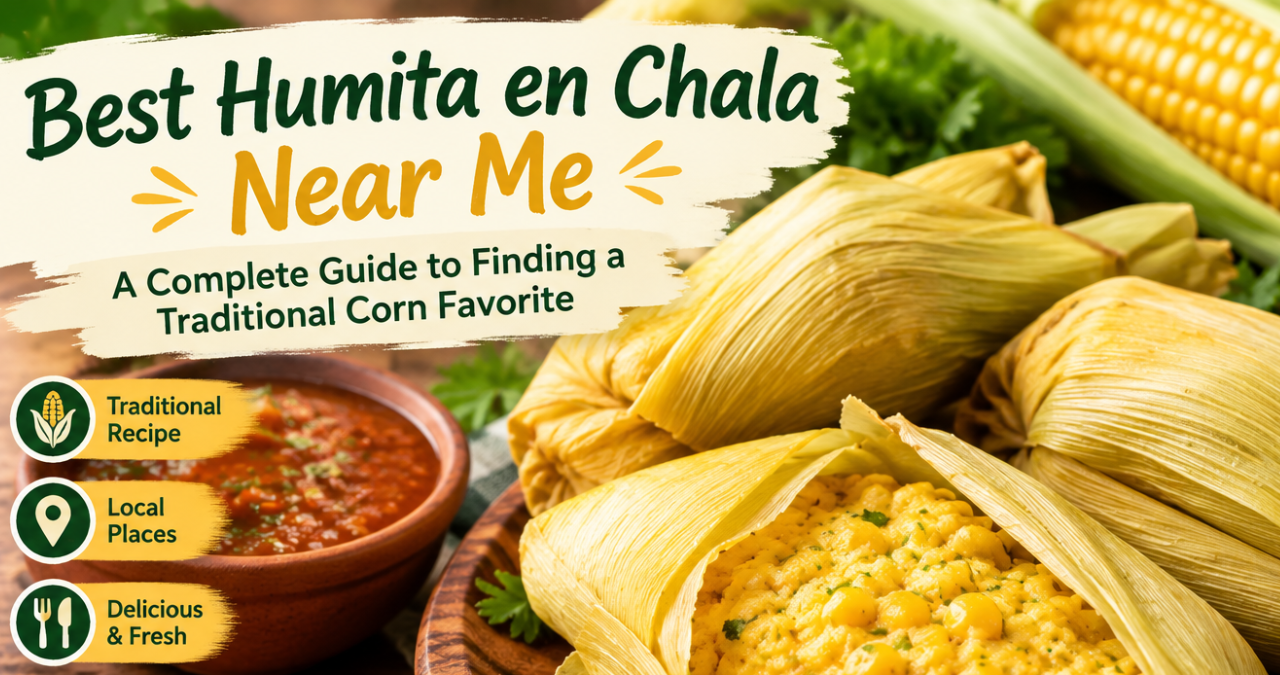
best humita en chala near me is a useful search phrase for anyone who wants to discover a warm, traditional South American corn dish close to home. Humita en chala is especially connected with the food traditions of northern Argentina and the wider Andean region. It is made mainly from fresh corn and is cooked inside corn husks, creating a soft, fragrant parcel with a wonderful combination of sweet, savory, and sometimes spicy flavors.
For food lovers, finding authentic humita en chala can be a fun culinary adventure. The dish isn’t simply another corn snack. It carries a long history and reflects the farming traditions of Andean communities. Traditional versions use fresh corn, onion, squash, cheese, herbs, and spices, although recipes vary from one region and family to another. Argentina’s official tourism information describes humita as a pre-Hispanic preparation strongly associated with provinces such as Salta, Jujuy, and Tucumán.
If you’re searching for best humita en chala near me, knowing what authentic humita should look, smell, and taste like can make your search much easier. A good restaurant or food vendor should understand the importance of fresh corn, a balanced filling, careful wrapping, and gentle cooking.
What Is Humita en Chala?
Humita en chala is a traditional corn-based dish prepared inside corn husks, which are called chalas in Spanish. The word “en chala” basically means that the humita is cooked and served in the corn husk.
Unlike many traditional tamales, humita generally starts with fresh corn rather than a typical nixtamalized corn dough. The fresh kernels are grated or ground into a soft mixture. Depending on the regional recipe, the mixture may contain squash, onion, cheese, peppers, basil, paprika, cumin, or other seasonings.
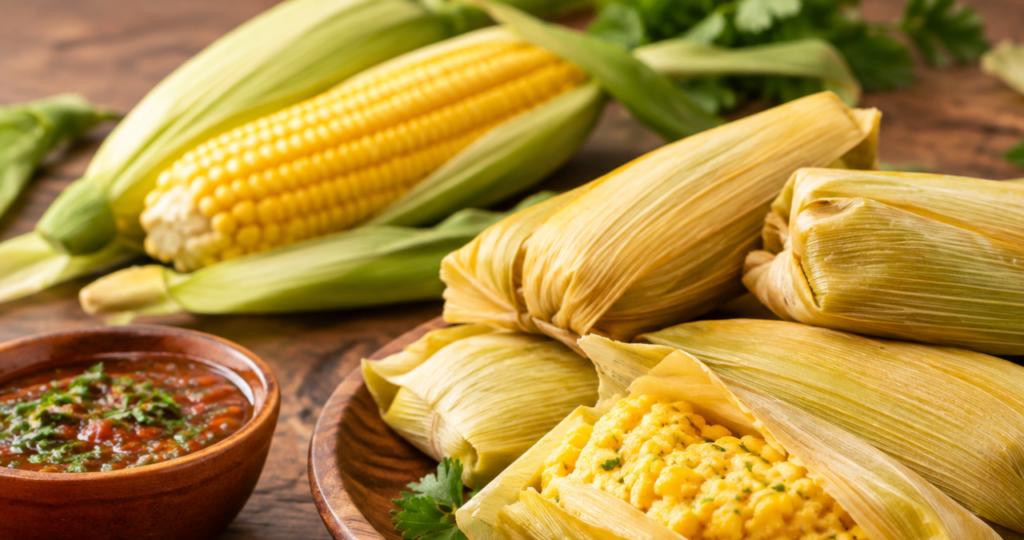
The prepared corn mixture is placed into two corn husks. The husks are folded around the filling to make a small package. The parcel is then tied and cooked in water or steamed until the filling becomes firm and tender. Argentina’s official tourism guide notes that the traditional package can be formed from two husks arranged in a cross shape.
The result is a comforting dish that allows the natural flavor of corn to remain the star.
Why Is Humita en Chala So Special?
There are plenty of corn dishes around the world, but humita en chala has its own personality.
First, the corn provides a naturally sweet flavor. Fresh corn can also bring a creamy texture when it is grated or ground. Then come the savory ingredients, such as onion and cheese, which create a richer taste.
The corn husk also adds something special. It protects the filling during cooking and helps create the traditional presentation. When the parcel is opened, the aroma of warm corn and herbs can be part of the experience.
Humita is also important from a cultural point of view. It belongs to a much older Andean food tradition and is found in several South American countries, including Argentina, Bolivia, Chile, Ecuador, Peru, and parts of Colombia.
So, when you’re looking for best humita en chala near me, you’re not simply looking for something to eat. You’re exploring a dish with deep culinary roots.
best humita en chala near me: What Should You Look For?
Searching online is only the first step. Once you find a restaurant that claims to serve humita en chala, look for signs that the dish is prepared with care.
Here are some useful things to check:
- Fresh corn: Fresh or high-quality corn should provide the main flavor.
- Proper corn husk: The dish should be wrapped in a real corn husk.
- Balanced seasoning: Herbs and spices should support the corn rather than overpower it.
- Good texture: The filling should be soft and moist but not watery.
- Cheese: Some regional recipes include melted cheese or cheese in the center.
- Fresh preparation: Ask whether the humitas are made fresh or reheated.
- Traditional presentation: A properly wrapped husk parcel is a good sign.
- Regional knowledge: Staff who can explain the ingredients and preparation may indicate that the dish is genuinely part of the restaurant’s menu.
Keep in mind that recipes can differ. There isn’t only one “correct” humita recipe.
The Main Ingredients in Traditional Humita
The ingredients used in humita en chala are relatively simple, but their quality matters.
| Ingredient | Purpose in the Dish |
|---|---|
| Fresh corn | Main ingredient and natural sweetness |
| Corn husks | Wrap the filling during cooking |
| Onion | Adds savory flavor |
| Squash | Gives softness and body in some recipes |
| Cheese | Adds creaminess and richness |
| Basil | Provides a fresh herbal aroma |
| Paprika | Adds color and gentle spice |
| Cumin | Adds warm, earthy flavor |
| Bell pepper | Gives sweetness and extra flavor |
| Chili or ají | Adds heat when desired |
| Salt | Balances the overall flavor |
Argentina’s official food information describes versions made with grated corn, squash, onion, bell pepper, basil, paprika, cumin, and sometimes cheese or spicy ingredients.
Of course, every cook has their own touch. That’s part of the charm.
How Humita en Chala Is Traditionally Prepared
Making authentic humita en chala requires patience. It may look simple, but several steps have to be handled correctly.
Preparing the Corn
Fresh corn is removed from the cob and grated or ground. This creates the soft corn mixture that becomes the heart of the dish.
Traditional methods can produce different textures. A finer mixture can feel almost creamy, while a coarser preparation gives the finished humita more noticeable corn texture.
Adding the Seasonings
The corn is mixed with ingredients such as onion, squash, peppers, herbs, and spices. Some recipes also use milk or other ingredients to create a smoother mixture.
The important thing is balance. A good humita shouldn’t taste like nothing but salt and chili. The flavor of corn should remain noticeable.
Preparing the Chalas
The corn husks need to be clean and flexible enough to fold without breaking. The filling is placed inside the husks, which are then folded into a compact parcel.
Argentina’s tourism guidance describes using two husks arranged in a cross before placing the corn mixture inside and closing the package.
Cooking the Humitas
The parcels are cooked until the corn mixture becomes properly set. Depending on the recipe, they can be boiled or steamed.
This cooking stage matters greatly. Too little cooking can leave the filling loose and underdone. Too much can make the texture dry.
When done properly, the result should be tender, fragrant, and satisfying.
Humita en Chala vs. Humita a la Olla
If you’re searching for best humita en chala near me, don’t accidentally order the wrong version.
There are two well-known Argentine preparations:
| Feature | Humita en Chala | Humita a la Olla |
|---|---|---|
| Presentation | Wrapped in corn husk | Served directly in a bowl or dish |
| Texture | More structured | Softer and creamier |
| Cooking | Cooked inside husks | Cooked as a mixture in a pot |
| Appearance | Small corn parcel | Creamy corn preparation |
| Eating style | Open husk and eat filling | Eat directly with spoon |
| Main ingredient | Fresh corn | Fresh corn |
| Traditional connection | Northern Argentine cuisine | Northern Argentine cuisine |
Both are delicious, but they provide different experiences.
Argentina’s official tourism information explains that humita can be served either “a la olla” or “en chala,” with the latter being enclosed in corn husks.
Is Humita en Chala the Same as a Tamale?
Not exactly.
The two dishes can look similar because both may involve a filling wrapped in leaves or husks. However, their ingredients and preparation can be different.
Humita en chala is centered on fresh corn. The corn is grated or ground and prepared into a mixture before being wrapped in the husk.
Traditional tamales often use a different type of corn dough and may contain meat, vegetables, or other fillings.
This difference is important when you’re searching for best humita en chala near me. A restaurant might offer tamales but not humita. Don’t assume they are the same dish.
They may share a family resemblance, but they’re not twins!
The Difference Between Argentine and Bolivian Humita
Humita traditions extend across the Andes, so recipes can change depending on the country and region.
In Bolivia, the dish may be known as huminta. Different versions can be baked, steamed, boiled, or cooked on a griddle. Some recipes use fresh corn, cheese, butter or lard, salt, sugar, cinnamon, or anise, depending on the regional tradition.
Argentine humita en chala is particularly associated with the country’s northwest, including Salta, Jujuy, and Tucumán. Argentina’s tourism sources highlight these areas as important homes of the dish.
That means two restaurants can both honestly call their dishes humita while producing noticeably different flavors.
best humita en chala near me: How to Search Locally
If you’re trying to find this dish in your city, use several search terms instead of relying on one phrase.
Try searches such as:
- “best humita en chala near me”
- “humita en chala restaurant”
- “Argentine restaurant near me”
- “Bolivian huminta near me”
- “South American corn dishes near me”
- “Argentine food near me”
- “traditional humita near me”
- “humita en chala delivery”
- “huminta en chala restaurant”
Google Maps, restaurant websites, social media pages, and food-delivery apps can all be useful.
However, menus change. A restaurant that served humita last year may not offer it today. It’s always smart to check the current menu or call before making a special trip.
What to Ask a Restaurant Before Ordering
A quick question can save you a disappointing journey.
You can ask:
“Do you currently serve humita en chala made with fresh corn?”
You can also ask:
- Is it served in a corn husk?
- Is it homemade?
- Is it available every day?
- Is it seasonal?
- Is it sweet, savory, or both?
- Does it contain cheese?
- Is it spicy?
- Can you make it without a particular ingredient?
- Is it steamed or boiled?
- Is it available for takeaway?
These questions are especially useful because humita may be seasonal or offered only on certain days.
Fresh corn plays an important role in traditional preparation, and some recipes are strongly connected with the corn harvest season.
How to Recognize a High-Quality Humita
Once your food arrives, you can use your senses to judge it.
Appearance
The husk should look clean and neatly folded. The parcel doesn’t have to be perfectly shaped, because handmade food often has small differences.
Aroma
You should notice the pleasant smell of corn and seasonings. Fresh herbs may also add a light fragrance.
Texture
The filling should be soft and moist. It shouldn’t be completely watery, nor should it be so dry that it crumbles.
Flavor
The best versions usually have layers of flavor. Sweet corn may appear first, followed by savory onion, herbs, cheese, or mild spice.
Balance
A good humita doesn’t need to be extremely spicy or salty. The main ingredients should work together.
Where Is Humita en Chala Most Closely Associated?
Northern Argentina is one of the most important regions for humita en chala.
Salta, Jujuy, and Tucumán are particularly well known for the dish. Argentina’s official tourism material identifies these provinces as key areas for humita and describes its connection with northern Argentine food culture.
The dish is also associated with Andean communities and agricultural traditions. In places such as Tilcara, visitors can encounter local versions at markets and food establishments.
This regional connection explains why an authentic humita can feel like much more than an ordinary corn snack.
Why Fresh Corn Makes Such a Difference
Corn is the foundation of humita, so its quality can change the final dish dramatically.
Fresh corn can provide:
- Natural sweetness
- Moisture
- A pleasant aroma
- Soft texture
- Strong corn flavor
If the corn is old or too dry, cooks may need to adjust the recipe. A dish made from fresh, tender corn can taste brighter and more naturally sweet.
This is one reason traditional humita can be seasonal.
Is Humita en Chala Healthy?
Humita can be part of a balanced diet, but its nutritional value depends on the recipe and portion size.
Corn provides carbohydrates and fiber, while vegetables can add vitamins and minerals. Cheese, butter, milk, or other rich ingredients can increase calories and fat.
Instead of thinking of the dish as simply “healthy” or “unhealthy,” consider the entire meal.
For example, you could enjoy humita alongside:
- A fresh salad
- Grilled vegetables
- Fresh fruit
- A light soup
- Unsweetened tea or water
Portion size matters, too.
What Makes a Restaurant Worth Visiting?
When you’re looking for best humita en chala near me, don’t judge a restaurant only by its rating.
Look for a combination of:
- Authentic ingredients
- Clear menu descriptions
- Fresh preparation
- Good food hygiene
- Knowledgeable staff
- Positive customer feedback
- Consistent quality
- Fair prices
- A menu that respects the original cuisine
A restaurant doesn’t need to be fancy to make an excellent humita.
Sometimes, the best traditional food comes from a small kitchen where recipes have been carefully prepared for generations.
Common Mistakes When Searching for Humita
There are several mistakes people make when looking for this dish.
Assuming Every Latin American Restaurant Serves It
Latin American cuisine covers many countries and thousands of dishes. A Mexican, Colombian, Brazilian, or Peruvian restaurant may not serve Argentine-style humita en chala.
Confusing Humita With Tamales
As discussed earlier, the dishes can look similar but aren’t necessarily prepared the same way.
Ignoring Seasonal Availability
Fresh corn can influence the availability and quality of humita.
Looking Only at Food Delivery Apps
Delivery apps are convenient, but some restaurants have larger menus on their own websites or social pages.
Not Calling Ahead
If you’re traveling across town specifically for humita, a quick phone call can save time.
Exploring Humita Through South American Cuisine
One of the best things about searching for best humita en chala near me is that it can introduce you to a wider world of South American food.
If you enjoy humita, you might also explore:
- Empanadas
- Locro
- Tamales
- Salteñas
- Argentine grilled meats
- Bolivian corn dishes
- Regional soups
- Fresh corn preparations
- Andean potato dishes
Food is a wonderful way to learn about geography and history. One plate can tell a story about farming, migration, family traditions, and local ingredients.
How to Enjoy Humita en Chala at Home
If you can’t find a nearby restaurant, you can also try making humita at home.
The basic idea is straightforward:
- Obtain fresh corn and clean corn husks.
- Grate or grind the corn.
- Prepare the onion and other vegetables.
- Mix the corn with your chosen seasonings.
- Add cheese if using it.
- Place the mixture into the husks.
- Fold the husks into parcels.
- Tie or secure them.
- Cook until the filling is properly set.
- Serve warm.
Traditional recipes can require some practice, particularly when wrapping the husks.
But don’t worry if your first parcel isn’t perfect. That’s part of learning.
How to Make Your Search More Successful
For people serious about finding best humita en chala near me, a little research can make a big difference.
Start by searching local restaurants. Then check their current menus. After that, look for recent customer photographs and reviews.
Pay particular attention to recent comments mentioning:
- Humita
- Huminta
- Fresh corn
- Argentine food
- Bolivian food
- Traditional dishes
- Homemade food
- Seasonal specials
If a restaurant has no current evidence that it serves humita, don’t assume it does.
For readers in places where this specialty is uncommon, an Argentine or Bolivian restaurant is often a more promising place to begin than a general international restaurant. Still, always verify the current menu first.
A Quick Checklist for Finding the Best Humita
Before ordering, run through this checklist:
| Question | What to Look For |
|---|---|
| Is it real humita en chala? | Fresh corn mixture inside corn husk |
| Is it fresh? | Recently prepared or made to order |
| Is the corn quality good? | Sweet, tender, flavorful corn |
| Is the texture right? | Soft and moist, not watery |
| Is the flavor balanced? | Corn, herbs, vegetables, and cheese work together |
| Is it authentic? | Restaurant understands the regional dish |
| Is it available today? | Confirm before visiting |
| Is it suitable for you? | Check cheese, dairy, spice, and other ingredients |
Finding Humita in Areas Where It Is Less Common
Not every city has a large Argentine or Bolivian food scene.
If your local area doesn’t have a restaurant specializing in South American cuisine, expand your search.
Try:
- Argentine cultural groups
- South American food festivals
- Latin American markets
- Specialty food events
- Local food communities
- Independent caterers
- Pop-up restaurants
- Weekend markets
Traditional dishes sometimes appear as specials rather than permanent menu items.
That means a restaurant that doesn’t list humita every day may still prepare it for festivals, cultural events, or seasonal menus.
What to Expect From the Best Version
The best humita en chala doesn’t necessarily need expensive ingredients or an elegant dining room.
What matters most is care.
A memorable humita should have:
- A clear corn flavor
- A pleasant natural sweetness
- Soft but structured texture
- Well-balanced seasoning
- A fragrant husk
- Fresh ingredients
- Appropriate cooking
- A traditional presentation
The dish should feel comforting rather than overly complicated.
That’s the beauty of traditional food: simple ingredients can create something remarkable when they’re handled properly.
The Cultural Value of Humita
Humita is more than a recipe. It represents the importance of corn in Andean and South American food traditions.
Historical and cultural sources describe humita as a dish with pre-Hispanic roots. It has survived and evolved through generations, with different communities developing their own versions.
That history gives the dish special meaning.
When people prepare humita today, they aren’t simply following a recipe. They’re continuing a culinary tradition that connects modern diners with older agricultural cultures.
Final Thoughts on best humita en chala near me
Searching for best humita en chala near me can lead to a delicious discovery. This traditional corn dish combines fresh ingredients, careful preparation, cultural history, and comforting flavor in one simple parcel.
The most important tip is to look beyond the name. Learn what genuine humita en chala is supposed to contain, understand how it differs from tamales and humita a la olla, and check whether the restaurant currently offers it.
Northern Argentina, especially Salta, Jujuy, and Tucumán, has a strong connection with the dish, while related humita and huminta traditions can also be found throughout the Andes.
Whether you discover it at a specialized South American restaurant, a cultural food event, a local market, or eventually prepare it yourself, best humita en chala near me is more than a food search. It’s an invitation to explore the flavors and traditions behind one of South America’s beloved corn dishes.
Join vantage here to receive the latest news and daily updates.