
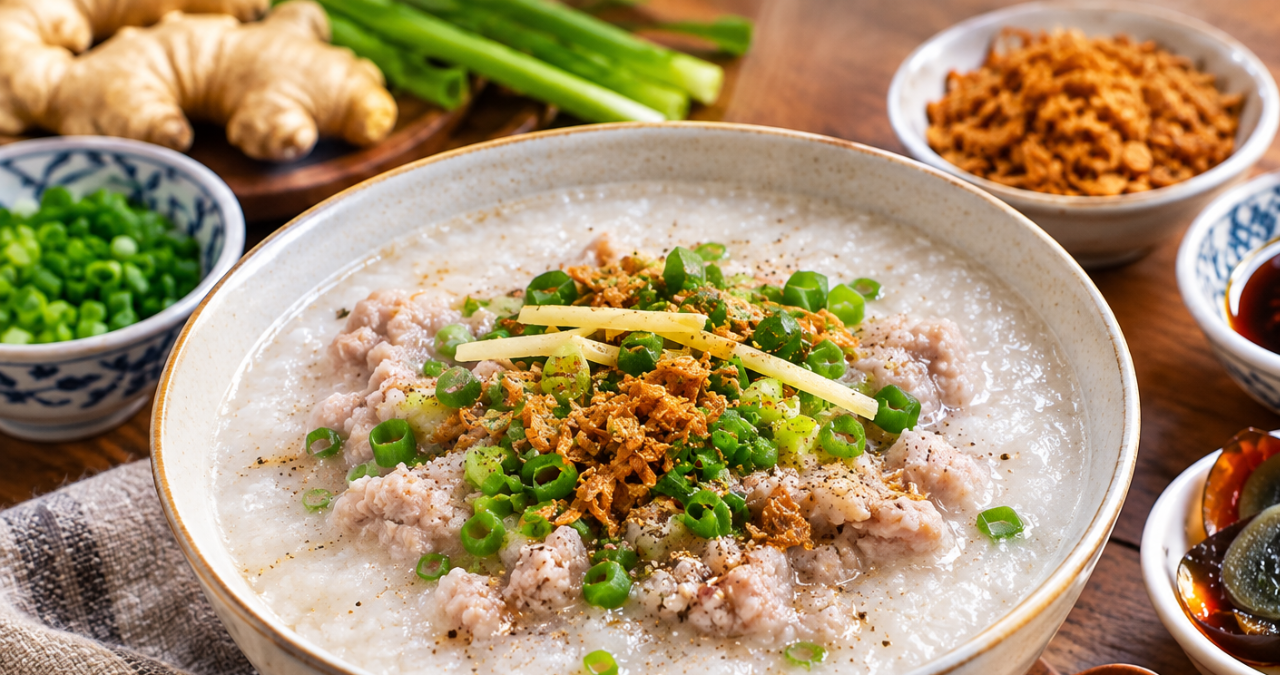
When people search for congee pork near me, they’re often looking for something simple, warm, filling, and comforting. Pork congee is a popular rice porridge found in many Asian cuisines. It is made by slowly cooking rice with plenty of water or stock until the grains become soft and creamy. Tender pork, vegetables, herbs, sauces, and other toppings can then be added to create a satisfying meal.
Whether you’re hungry after a long day, looking for a gentle breakfast, or simply curious about Asian comfort food, pork congee is worth exploring. It may look humble, but don’t let its simple appearance fool you. A well-prepared bowl can have layers of flavor, a smooth texture, and carefully balanced toppings.
Finding a good bowl isn’t always as easy as typing a phrase into a search box, though. Restaurants may use different names for the dish, and recipes can vary from one region to another. This guide explains what pork congee is, how to find it nearby, what to look for in a quality bowl, and how to enjoy it at home or in a restaurant.
What Is Pork Congee?
Congee is a type of rice porridge traditionally made by cooking rice in a large amount of liquid. Depending on the cooking method, the rice may become very soft while still retaining a little texture, or it may break down almost completely into a creamy mixture.
Pork congee is a version that uses pork as a main ingredient. The pork may be minced, sliced, shredded, marinated, or cooked into the porridge itself.
Different restaurants prepare it in different ways. Some cooks use pork broth for a deeper taste, while others keep the base light and allow toppings to provide most of the flavor.
Common ingredients include:
- White rice
- Water or broth
- Ground or sliced pork
- Ginger
- Spring onions
- Garlic
- Soy sauce
- Sesame oil
- White pepper
- Mushrooms
- Boiled or preserved eggs
- Fried shallots
- Fresh herbs
The result is usually warm, soft, savory, and comforting. In other words, it’s the kind of meal that can hit the spot when you want something substantial without feeling overly heavy.
Why Search for congee pork near me?
Searching for congee pork near me can be useful when you want a freshly prepared bowl without making it yourself.
Cooking congee is relatively straightforward, but traditional versions can take time because the rice needs to simmer until it reaches the desired consistency. Restaurants that specialize in Asian dishes may already have a carefully developed recipe ready to serve.
A nearby restaurant may also offer advantages such as:
- Freshly cooked food
- Several topping choices
- Different pork preparations
- Traditional seasonings
- Takeaway options
- Delivery services
- Breakfast or late-night availability
- Regional variations
There’s another benefit, too. Eating locally gives you a chance to discover restaurants you might otherwise overlook. Sometimes the best meal is hiding around the corner.
How to Find Good Pork Congee Nearby
Finding a nearby restaurant is only half the job. The next step is deciding whether the restaurant actually serves the kind of congee you want.
Start by searching for terms such as:
- “pork congee”
- “pork rice porridge”
- “Chinese pork congee”
- “Cantonese congee”
- “Asian rice porridge”
- “congee with pork”
- “minced pork congee”
- “pork and century egg congee”
This matters because restaurants don’t always use the exact same name on their menus.
Online restaurant menus are particularly useful. Before ordering, check whether the description mentions pork, broth, ginger, eggs, mushrooms, or other ingredients you enjoy.
Reviews can also provide useful clues. Look for comments about:
- Flavor
- Portion size
- Pork tenderness
- Texture
- Freshness
- Temperature
- Service
- Packaging for takeaway
Keep in mind that everyone’s taste is different. One person might love a thick, creamy congee while another prefers a thinner version. So, read several reviews rather than relying on one opinion.
What Makes a Great Bowl of Pork Congee?
A good bowl of congee isn’t simply rice mixed with water. Small details can make a big difference.
The Rice-to-Liquid Balance
The amount of liquid affects the final texture. Too much liquid can make the congee thin and watery, while too little may produce a dish that feels overly dense.
A skilled cook knows how to create the right consistency for the recipe.
Slow Cooking
Traditional congee often benefits from slow cooking. As the rice simmers, the grains release starch, creating the creamy texture associated with the dish.
Patience is the name of the game here.
Tender Pork
Pork should complement the rice rather than overpower it. Depending on the recipe, it may be lightly seasoned minced pork, shredded pork, sliced pork, or another preparation.
Good pork should be flavorful and tender rather than dry or tough.
Aromatic Ingredients
Ginger and spring onions are common additions because they bring freshness and fragrance. Garlic, sesame oil, white pepper, and soy sauce can also add depth.
Fresh Toppings
Fresh toppings provide contrast to the soft rice porridge. Crunchy fried onions, sliced spring onions, herbs, or other garnishes can make every spoonful more interesting.
Types of Pork Congee You May Find
When looking for congee pork near me, don’t be surprised if you encounter several variations.
| Type | Common Features | Flavor Profile |
|---|---|---|
| Minced Pork Congee | Ground pork cooked with rice porridge | Savory and mild |
| Pork and Egg Congee | Pork with egg or preserved egg | Rich and savory |
| Shredded Pork Congee | Thin pieces of cooked pork | Light and tender |
| Pork Bone Congee | Rice cooked with pork-based stock | Deep and hearty |
| Ginger Pork Congee | Pork with generous ginger | Warm and aromatic |
| Mushroom Pork Congee | Pork and mushrooms | Earthy and savory |
| Seafood and Pork Congee | Pork combined with seafood | Rich and complex |
Availability depends on the restaurant and local food culture.
Congee and Regional Food Traditions
Congee is enjoyed in many parts of Asia, but recipes aren’t identical everywhere.
Cantonese-style congee, for example, is known for its smooth texture and long cooking process. Other regions may use different rice varieties, seasonings, meats, vegetables, or toppings.
In some places, congee is mainly associated with breakfast. In others, it can be enjoyed for lunch, dinner, or as a comforting meal at almost any time.
That’s part of what makes the dish so interesting. One simple idea—rice slowly cooked in liquid—can lead to countless variations.
What to Order With Pork Congee
A bowl of congee can be satisfying on its own, but restaurants often offer side dishes and toppings.
Popular additions include:
- Spring onions
- Fresh ginger
- Fried garlic
- Fried shallots
- Sesame oil
- Soy sauce
- White pepper
- Chili oil
- Pickled vegetables
- Preserved eggs
- Mushrooms
- Steamed vegetables
- Fried dough sticks
Some toppings add flavor, while others provide texture. If the congee itself is soft and creamy, a crispy side can make the meal much more enjoyable.
Is Pork Congee a Good Breakfast?
Absolutely. Pork congee has long been enjoyed as a breakfast food in several Asian food traditions.
Its warm texture makes it particularly appealing in the morning. Unlike a very rich fried breakfast, a simple bowl of congee can feel light while still providing energy from rice and protein from pork.
A balanced breakfast might include:
- Pork congee
- A boiled or preserved egg
- Fresh vegetables
- Spring onions
- Fruit or another light side
Of course, breakfast choices are personal. Some people prefer congee early in the morning, while others enjoy it later in the day.
Pork Congee as Comfort Food
Food doesn’t always have to be fancy to be memorable.
Pork congee is a good example of comfort food because it is warm, soft, aromatic, and easy to customize. Many people associate rice porridge with home cooking, family meals, rainy days, or times when they simply want something soothing.
The appeal often comes from its simplicity.
There are no complicated layers of pastry or elaborate presentation required. Instead, the experience comes from a bowl of warm rice, flavorful broth, tender pork, and fragrant toppings.
Sometimes, that’s exactly what you need.
How to Judge a Restaurant Before Ordering
If you find a restaurant offering pork congee, take a few moments to assess it.
Check the Menu
A detailed menu can tell you whether the restaurant specializes in the cuisine or simply offers a few related dishes.
Read Recent Reviews
Recent reviews may give you a better idea of current quality than very old comments.
Look at Food Photos
Photos can help you understand the portion size, thickness, toppings, and presentation.
Check Opening Hours
Congee is often associated with breakfast and morning meals, but not every restaurant serves it all day.
Look at Takeaway Packaging
If you’re ordering delivery, check whether the restaurant packages hot porridge properly. A good container should help prevent spills while keeping the food warm.
Questions to Ask When Ordering
Don’t be shy about asking questions. Restaurants are usually happy to explain their dishes.
You might ask:
- Is the pork minced or sliced?
- Is the congee made with pork broth?
- Is it spicy?
- Does it contain preserved egg?
- Can I add ginger?
- Can I order extra spring onions?
- Is the portion suitable for one person?
- Can the salt or soy sauce be reduced?
- Is takeaway available?
If you’re trying congee for the first time, these questions can help you choose a bowl that matches your taste.
How Pork Congee Is Traditionally Prepared
Although methods vary, the basic process is simple.
First, rice is washed and placed in a pot with water or broth. The mixture is then brought to a simmer.
The rice cooks slowly while the liquid gradually becomes thicker. Depending on the recipe, cooking may continue until the rice grains begin to break apart.
Pork can be added at different stages.
Some recipes cook the pork separately before adding it to the finished congee. Others cook minced pork directly in the porridge. Ginger and other aromatics may be added during cooking to develop flavor.
Finally, the bowl is finished with toppings such as spring onions, sesame oil, soy sauce, white pepper, or fried shallots.
The process is simple, but good results require attention to temperature, texture, seasoning, and timing.
Making Pork Congee at Home
If you can’t find congee pork near me, making a simple version at home is a practical alternative.
You don’t need expensive equipment. A heavy pot is enough, although a rice cooker or pressure cooker can also make the process easier.
Basic Ingredients
For a simple homemade version, you can use:
- White rice
- Water or chicken stock
- Ground pork
- Fresh ginger
- Spring onions
- Soy sauce
- Sesame oil
- White pepper
- Salt
Basic Method
Rinse the rice and place it in a pot with plenty of liquid. Bring it to a boil, then reduce the heat.
Allow the rice to simmer gently, stirring occasionally. Continue cooking until the grains become soft and the mixture develops a creamy texture.
Meanwhile, season the pork lightly. Cook it thoroughly before adding it to the congee if your recipe calls for separate cooking.
Add ginger and other seasonings according to taste. Once the rice reaches the desired consistency, add the pork and adjust the seasoning.
Finish with spring onions and a small amount of sesame oil.
And there you have it—a warm homemade bowl without any culinary gymnastics.
Tips for Better Homemade Congee
A few simple techniques can improve your results.
Use Enough Liquid
Congee needs considerably more liquid than ordinary steamed rice. You can always reduce the liquid later, but it’s harder to correct a dry mixture.
Cook Slowly
Gentle cooking helps the rice break down gradually and develop a smooth consistency.
Stir Occasionally
Stirring helps prevent the rice from sticking to the bottom of the pot.
Season Gradually
Add salt and soy sauce little by little. This makes it easier to control the final taste.
Add Fresh Garnishes at the End
Spring onions, herbs, and sesame oil often taste fresher when added just before serving.
Health and Nutrition Considerations
Pork congee can be part of a balanced meal, but its nutritional value depends on the ingredients and serving size.
Rice provides carbohydrates, while pork contributes protein and other nutrients. Vegetables and herbs can add fiber and micronutrients.
However, some restaurant versions may contain significant amounts of sodium because of soy sauce, stock, preserved foods, or other seasonings.
For a more balanced meal, consider adding vegetables and choosing moderate amounts of salty toppings.
People with specific dietary needs should always ask restaurants about ingredients and preparation methods.
Common Mistakes When Choosing Pork Congee
Searching for congee pork near me can produce many results, but not all bowls will match your expectations.
Some common mistakes include:
- Ordering without checking the ingredients
- Assuming every congee has the same texture
- Ignoring portion information
- Not checking whether pork is included
- Forgetting to ask about spicy toppings
- Choosing solely based on the lowest price
- Relying on one review
- Ordering from a restaurant that doesn’t package soup-like dishes carefully
A little research can save you from an underwhelming meal.
Dining In Versus Ordering Delivery
Both options have advantages.
Dining In
Eating at the restaurant allows you to enjoy the congee immediately after preparation. You can also ask for additional toppings and seasoning.
Delivery
Delivery is convenient when you want a warm meal at home or work. It’s particularly useful on busy days.
However, congee can thicken as it sits. Therefore, the texture you receive may be slightly different from the texture served directly from the kitchen.
When ordering delivery, choose restaurants that have experience packaging hot soups and porridges.
How to Customize Your Bowl
One of the best things about congee is its flexibility.
You can often customize your bowl with:
- Extra pork
- Ginger
- Spring onions
- Chili oil
- Sesame oil
- Mushrooms
- Egg
- Fried shallots
- Pickled vegetables
- Less salt
- Extra pepper
If you like bold flavors, chili oil and fried garlic can transform a mild bowl. If you prefer delicate flavors, ginger and spring onions may be enough.
How Much Does Pork Congee Cost?
Prices vary greatly depending on the restaurant, location, ingredients, and portion size.
A simple pork congee may be relatively affordable, while premium versions with special ingredients can cost more.
Factors that can influence the price include:
| Factor | Possible Effect |
|---|---|
| Portion size | Larger bowls usually cost more |
| Pork quantity | More meat can increase the price |
| Premium toppings | Eggs, seafood, and specialty ingredients may add cost |
| Restaurant type | Specialty restaurants may charge more |
| Delivery | Delivery fees may increase the total |
| Location | Prices vary between cities and neighborhoods |
Rather than choosing only by price, consider quality, portion size, ingredients, and customer reviews together.
Why Texture Matters So Much
Texture is one of the defining features of congee.
Some people enjoy very smooth congee where the rice has almost completely dissolved. Others prefer visible rice grains with a slightly thicker consistency.
Neither choice is automatically better. It’s a matter of preference.
If you’re new to the dish, try a traditional smooth version first. Once you know what you like, you can explore thicker or more textured varieties.
Pork Congee for Different Occasions
Congee isn’t limited to one type of meal.
You can enjoy it as:
- A quick breakfast
- A relaxed weekend brunch
- A light lunch
- A comforting dinner
- A late-night meal
- A takeaway meal
- A family dish
- A rainy-day comfort food
Its versatility is one reason the dish continues to appear on menus around the world.
What to Look for in Food Safety
When eating pork congee, food safety matters.
Choose restaurants that appear clean and professional. Pork should be properly cooked, and hot foods should be stored and served safely.
When ordering delivery, eat the food promptly after arrival and follow appropriate food-storage practices.
If you’re preparing congee at home, keep raw pork separate from ready-to-eat ingredients and cook the pork thoroughly.
Simple habits can make a big difference.
The Cultural Appeal of Congee
Congee represents more than a simple bowl of rice porridge.
Across different Asian communities, rice porridge has been connected with family cooking, traditional breakfasts, hospitality, and everyday meals.
Recipes are often passed from one generation to another. A grandmother’s congee may taste completely different from a restaurant chef’s version, yet both can carry the same feeling of warmth and comfort.
That’s the beauty of traditional food: it evolves without losing its roots.
Exploring Different Toppings
Once you’ve found a restaurant serving good pork congee, toppings are an easy way to explore different flavors.
Try ginger for freshness and warmth. Add spring onions for a mild onion flavor. Choose sesame oil for nuttiness. Chili oil can bring heat, while fried shallots provide crunch.
If available, preserved egg can create a richer and more distinctive taste.
Don’t be afraid to experiment. Food discovery is part of the fun.
Frequently Asked Questions About congee pork near me
What does pork congee taste like?
Pork congee is usually mild, savory, warm, and slightly creamy. Its flavor can become richer when made with broth, ginger, soy sauce, mushrooms, or other toppings.
Is congee the same as rice soup?
Not exactly. Although both contain rice and liquid, congee is generally cooked for longer so that the rice breaks down and thickens the mixture.
Can pork congee be spicy?
Yes. The base is often mild, but chili oil, fresh chilies, or spicy sauces can make it hot.
Is pork congee only eaten for breakfast?
No. While breakfast is a popular time to eat congee in some cultures, it can be served throughout the day.
Can I make pork congee without pork?
Yes. You can replace pork with chicken, fish, seafood, mushrooms, tofu, or vegetables, depending on the recipe.
How do I find the best pork congee nearby?
Search for restaurants offering pork congee or Asian rice porridge, then compare menus, recent reviews, food photos, location, hours, and prices.
Final Tips for Finding a Great Bowl
When searching for congee pork near me, keep your expectations simple but your standards sensible.
Look for a restaurant that offers:
- Freshly prepared food
- Properly cooked pork
- A pleasant rice texture
- Balanced seasoning
- Fresh toppings
- Good hygiene
- Clear menu information
- Positive recent reviews
- Reliable takeaway or delivery service
You don’t necessarily need the fanciest restaurant. A small neighborhood kitchen with a well-made traditional recipe can sometimes beat a much larger establishment.
Final Thoughts on congee pork near me
Finding congee pork near me can open the door to a comforting and flavorful food experience. Pork congee may be made from humble ingredients, but careful cooking, quality pork, good seasoning, and fresh toppings can turn those ingredients into a memorable meal.
Whether you enjoy it at a local restaurant, order it for delivery, or prepare it at home, congee is wonderfully flexible. You can keep it simple with pork and ginger or make it more exciting with eggs, mushrooms, chili oil, fried shallots, and fresh herbs.
So, next time hunger strikes and you’re searching for congee pork near me, don’t just choose the first result you see. Check the menu, explore reviews, consider the texture and toppings you prefer, and give yourself a chance to discover a new favorite dish. After all, a warm bowl of pork congee might be simple—but sometimes simple food is exactly what hits the spot.
Join vantage here to receive the latest news and daily updates.